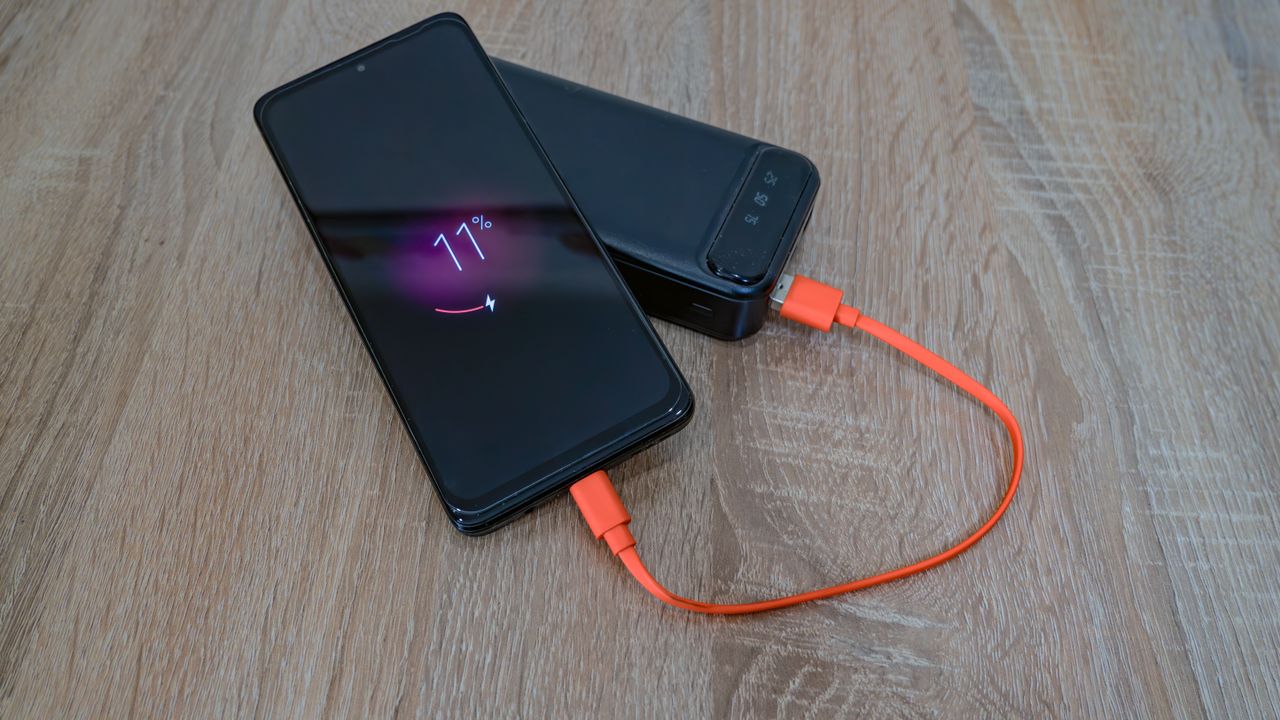
A power bank seems like the simplest gadget in the world. It’s a battery in a box. You charge it, you carry it, you plug your phone into it when you’re running low. But anyone who has bought one knows it’s not quite that simple. The 20,000 mAh power bank that should charge your phone five times barely manages three. The one you bought for its speed charges your phone painfully slowly. The one you packed for a trip gets stopped at airport security.
The problem isn’t that power banks are complicated. It’s that the numbers on the box don’t tell the whole story, and a few details make the difference between a power bank you love and one that sits in a drawer.
In this guide, we’ll explain what capacity really means, why you never get the full number printed on the box, how to match a power bank to your phone’s charging speed, what ports and features to look for, how to travel with one safely and how to spot cheap power banks that aren’t worth buying.
📋 Table of Contents
- Start with how you’ll actually use it
- Capacity explained: why you never get the full number
- Match the charging speed to your phone
- Ports, recharging and useful features
- Size and weight: find the balance
- Flying with a power bank
- Safety: avoid cheap and counterfeit power banks
- How to take care of your power bank
- Frequently asked questions
- Final thoughts
We will keep the technical side as simple as possible. You do not need to understand battery chemistry to make a good choice. You just need to know which three or four numbers matter, and how to read them in a way that reflects real life rather than marketing.
Start with how you’ll actually use it
Before looking at specifications, think about your situation. The right power bank for one person is the wrong one for another.
- Daily top-ups: if you just need an extra 30 to 50 percent to get through a long day, a small, light power bank around 5,000 mAh is often enough. It fits in a pocket or small bag.
- Full recharges: if you want to fully recharge your phone once or twice, look at 10,000 mAh models. They’re the most popular size for good reason.
- Travel and multiple devices: for long trips, camping or charging a phone, tablet and headphones, consider 20,000 mAh or more.
- Laptops: some USB-C laptops can charge from power banks, but they need high-wattage output, often 45 to 100 watts, and a large capacity.
Bigger isn’t always better. A large power bank is heavier, takes longer to recharge itself and may be overkill if you only need a small boost.
It also helps to think about how often you will actually use it. A power bank you need every day should be small enough to live in your bag permanently. One you only need for trips can be larger, since you will pack it deliberately. Many people end up owning two: a slim one for daily life and a bigger one for travel.
Capacity explained: why you never get the full number
Power bank capacity is listed in mAh, or milliamp-hours. It’s tempting to divide the power bank’s capacity by your phone’s battery capacity and assume that’s how many charges you’ll get. For example, a 10,000 mAh power bank and a 5,000 mAh phone battery should mean two full charges, right?
In practice, you’ll usually get noticeably less. There are two main reasons.
Voltage conversion
Power bank capacity is usually measured at the internal battery cells’ voltage, around 3.7 volts. When the power bank charges your phone, it converts that to USB output voltage, often 5 volts or higher for fast charging. That conversion means the usable capacity at the output is lower than the number on the box. Many good power banks list a rated capacity on the label, which reflects what you can actually get out.
Energy losses
Some energy is lost as heat in the power bank, the cable and the phone’s charging circuitry. Wireless charging from a power bank loses even more.
A realistic rule of thumb
Expect to get roughly 60 to 70 percent of the advertised capacity into your phone. So a 10,000 mAh power bank typically delivers around 6,000 to 7,000 mAh to your phone. With a phone that has a 5,000 mAh battery, that’s a bit more than one full charge, not two.
Using watt-hours, often written as Wh, is a more accurate way to compare power banks. Many manufacturers print it on the label. It’s also the number airlines care about, as we’ll see later.
This is not the power bank cheating you. It is simply how the physics works, and every honest manufacturer faces the same losses. The difference is that some brands are more transparent about it, printing both the cell capacity and the rated output capacity, which makes comparison much easier.
Keep in mind that your phone is also using energy while it charges, especially if the screen is on. Charging from a power bank while scrolling or navigating means more of that energy is consumed immediately rather than stored. For the most charge per power bank, plug in, lock the phone and let it charge undisturbed.
Match the charging speed to your phone
Capacity tells you how much energy you carry. Output tells you how fast you can use it. A big power bank with slow output will take ages to charge your phone.
Check your phone’s charging standard
Most modern phones use USB Power Delivery, or USB PD, for fast charging over USB-C. iPhones and Google Pixel phones use it, as do many other Android phones. Samsung’s fastest charging modes use PPS, an extension of USB PD. Some brands use their own proprietary fast charging systems.
For most people, a power bank with a USB-C port that supports USB PD at 20 watts or more is a great choice. If you have a recent Samsung Galaxy and want its fastest speed, look for PPS support at the appropriate wattage.
Watts matter more than amps
Power banks list output in watts, volts and amps. The number that matters most for speed is watts. A 20 watt output is enough for fast charging most phones. 25 to 45 watts suits some Samsung and other Android phones. Higher outputs mainly matter for tablets and laptops.
Remember the cable
Even the best power bank won’t fast charge your phone through a cheap, low-rated cable. Use a good quality USB-C cable rated for the power you need.
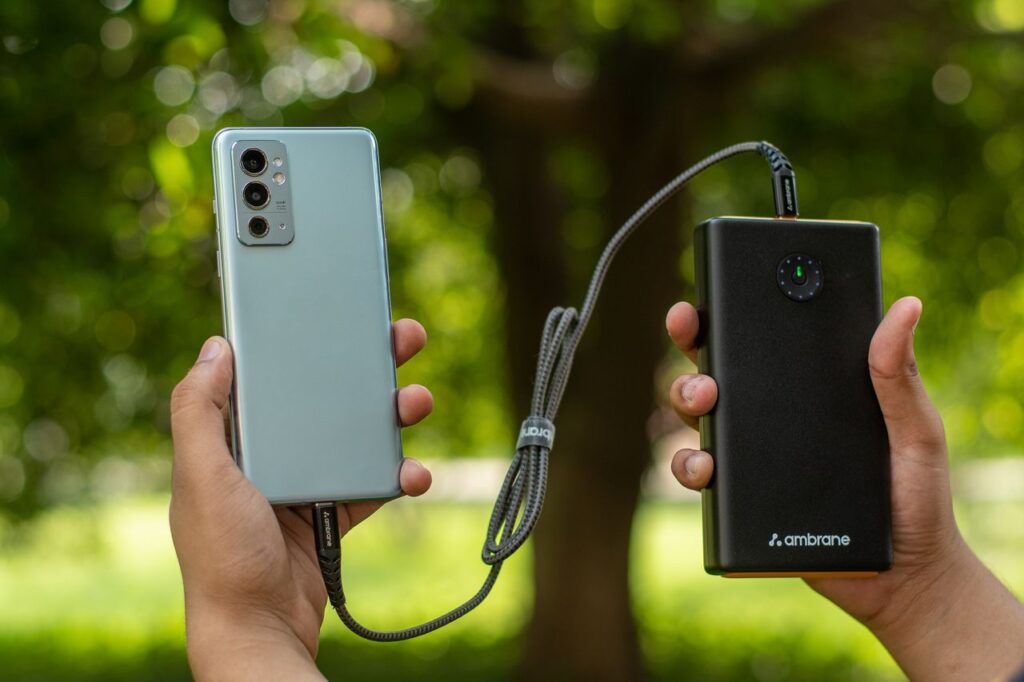
If you own several devices from different brands, a power bank with USB PD and PPS support covers most of them well. It might not reach the absolute maximum speed of every proprietary system, but it will charge everything reasonably fast, which is usually more useful than being perfect for just one phone.
Ports, recharging and useful features
USB-C is the priority
Look for at least one USB-C port that works as both input and output. It charges your phone quickly and recharges the power bank quickly. USB-A ports are useful for older cables and accessories, but they’re usually slower.
How fast does the power bank recharge itself?
This is often overlooked. A 20,000 mAh power bank with slow input can take many hours to recharge. Look for a high input wattage, ideally via USB-C PD, so it refills overnight or in a few hours.
Pass-through charging
Some power banks can charge your phone while they’re plugged into the wall, which is called pass-through charging. It’s handy when you have only one wall outlet. Not all models support it, and some do it more slowly.
Built-in cables
Power banks with built-in cables are convenient, because you don’t need to remember a separate cable. Make sure the built-in cable matches your phone’s port.
Displays and indicators
A digital display showing the exact percentage is more helpful than four small lights. It tells you exactly when the power bank needs charging.
Wireless and magnetic power banks
Magnetic wireless power banks snap onto compatible phones, including iPhones with MagSafe and some Android phones with magnetic cases. They’re convenient, but wireless charging is less efficient and generates more heat, so you’ll get fewer charges from the same capacity.
When reading product listings, check that the advertised fast charging output is available on the port you plan to use. Some power banks only offer full speed on one specific USB-C port, while other ports are slower. If you plan to charge two devices at once, check how the total output is shared between them.
Size and weight: find the balance
Capacity adds weight. A 5,000 mAh power bank might weigh little more than a deck of cards. A 20,000 mAh model can weigh as much as a smartphone or two. Before buying, think about where you’ll carry it. If it’s too heavy, you’ll leave it at home, and a power bank at home doesn’t help anyone.
For most people, a 10,000 mAh power bank with 20 watt USB-C PD output is the sweet spot between capacity, speed and portability.
A good way to decide is to hold something of similar weight in your bag for a day. If it feels annoying, choose a smaller power bank. Many people find that two small charges during a day are more practical than carrying one heavy brick around. You can always top up the small power bank whenever you sit down near an outlet, at a cafe, at work or on a train.
Shape matters too. Slim, flat power banks slide easily into pockets and laptop sleeves, while thick cylinders can be awkward. Some models are designed to sit flush against the back of a phone so you can hold both together while charging, which is handy when you need to keep using the phone.
Flying with a power bank
Airlines have specific rules for power banks because they contain lithium batteries.
- Carry-on only. Power banks must usually go in your carry-on bag, not checked luggage.
- Watt-hour limits. Many airlines and aviation authorities allow power banks up to 100 Wh without special approval. Between 100 and 160 Wh may require airline approval. Above 160 Wh is generally not allowed. A typical 20,000 mAh power bank is around 74 Wh at 3.7 volts, which is within the common limit.
- Labels matter. Make sure the capacity in Wh or mAh is clearly printed. Unlabeled power banks may be confiscated.
- Airline rules vary. Some airlines have additional restrictions, such as not allowing power banks to be used or charged during the flight. Always check your airline’s current rules before you travel.
To convert mAh to Wh yourself, multiply mAh by the voltage, usually 3.7, and divide by 1,000. For example, 10,000 mAh times 3.7 divided by 1,000 equals 37 Wh.
If you are unsure whether your power bank qualifies, look at the label before you leave home. If the capacity is printed only in mAh, do the quick conversion described above and write the Wh number down. It can save an awkward conversation at the security checkpoint, and it shows staff you know the rules.
Safety: avoid cheap and counterfeit power banks
A power bank is a large lithium battery that you carry close to your body. Quality matters.
- Buy from reputable brands and sellers. Counterfeit and low-quality power banks are common online.
- Be wary of unrealistic claims. A tiny, very cheap power bank claiming 30,000 mAh or more is a red flag.
- Look for safety protections, such as overcharge, over-discharge, short-circuit and temperature protection.
- Check certifications relevant to your region.
- Stop using damaged power banks. If a power bank is swollen, dented, unusually hot or smells strange, stop using it and dispose of it at a battery recycling point.
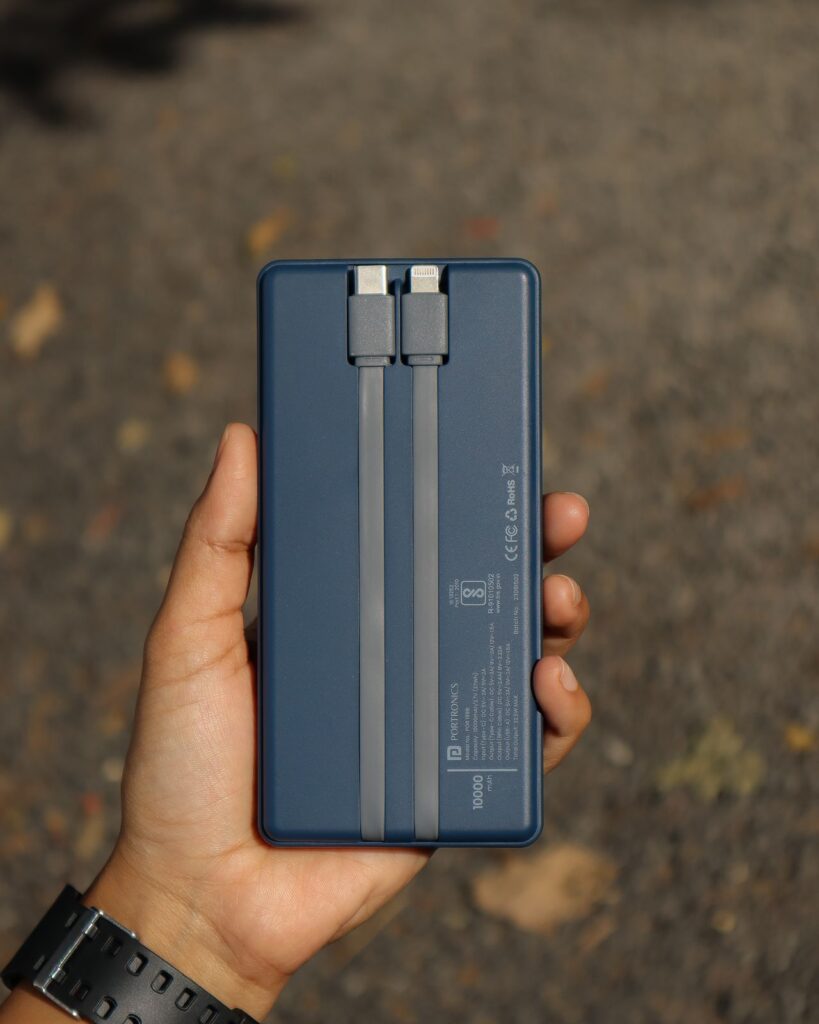
Price can be a useful signal. Quality power banks with genuine capacity and proper safety circuits cost a certain amount to make. If a listing is dramatically cheaper than well-known brands with the same specifications, it is worth asking why. With batteries, saving a few dollars is rarely worth the risk.
How to take care of your power bank
- Don’t leave it empty for long periods. Store it partly charged, around 50 percent if you won’t use it for months.
- Avoid heat. Don’t leave it in a hot car or direct sunlight.
- Recharge it every few months even if you don’t use it, so it’s ready when you need it.
- Use good cables and chargers to recharge it.
- Replace it when it wears out. Like phone batteries, power banks lose capacity over time.
It is also a good idea to label your power banks if you own several, with the purchase year written on a small sticker. After two or three years of regular use, you may notice they no longer last as long. Knowing roughly how old each one is helps you decide when to retire it and buy a fresh one.
When a power bank reaches the end of its life, do not throw it in the regular trash. Lithium batteries can cause fires in garbage trucks and recycling facilities. Take it to an electronics store, a recycling center or a battery collection point, many of which accept old power banks for free.
Frequently asked questions
How many times will a 10,000 mAh power bank charge my phone?
Usually about one to two full charges for most modern phones, depending on the phone’s battery size and charging efficiency. Expect around 60 to 70 percent of the advertised capacity to reach your phone.
Can a power bank damage my phone?
A quality power bank from a reputable brand won’t damage your phone. Cheap, uncertified power banks may lack proper protections and are best avoided.
Is it okay to leave my phone connected to a power bank?
Yes. Your phone stops charging when it’s full. Just avoid leaving the phone and power bank in a hot place.
Why does my power bank charge my phone slowly?
Common reasons include using a USB-A port instead of USB-C, a low-quality cable, a power bank that doesn’t support your phone’s fast charging standard, or several devices charging at once.
Can I take a power bank on a plane?
Usually yes, in your carry-on bag, if it’s within the airline’s watt-hour limits, commonly up to 100 Wh. Check your airline’s rules before flying.
Are wireless power banks worth it?
They’re convenient, especially magnetic ones, but they’re less efficient than wired charging and produce more heat. If you value maximum capacity and speed, wired is better.
If you are still unsure what to buy after reading this guide, start with a well-reviewed 10,000 mAh power bank with a USB-C PD port from a reputable brand. It is the safest all-round choice for most phones and most people. You can always add a larger or smaller one later once you understand how you actually use it.
Final thoughts
The right power bank depends on how you’ll use it. For most people, a 10,000 mAh model with a USB-C port supporting 20 watt USB PD fast charging hits the sweet spot. Expect to get about two-thirds of the advertised capacity into your phone, use a good cable, buy from a reputable brand and check airline rules before you travel. Choose well, and a power bank becomes one of those small gadgets you’ll be grateful for every time your battery runs low far from an outlet.